Sand & geology · 6 min read
Why Sand Is the Color It Is
Sand is leftover rock and shell, and its color is a direct readout of what a coastline is made of.
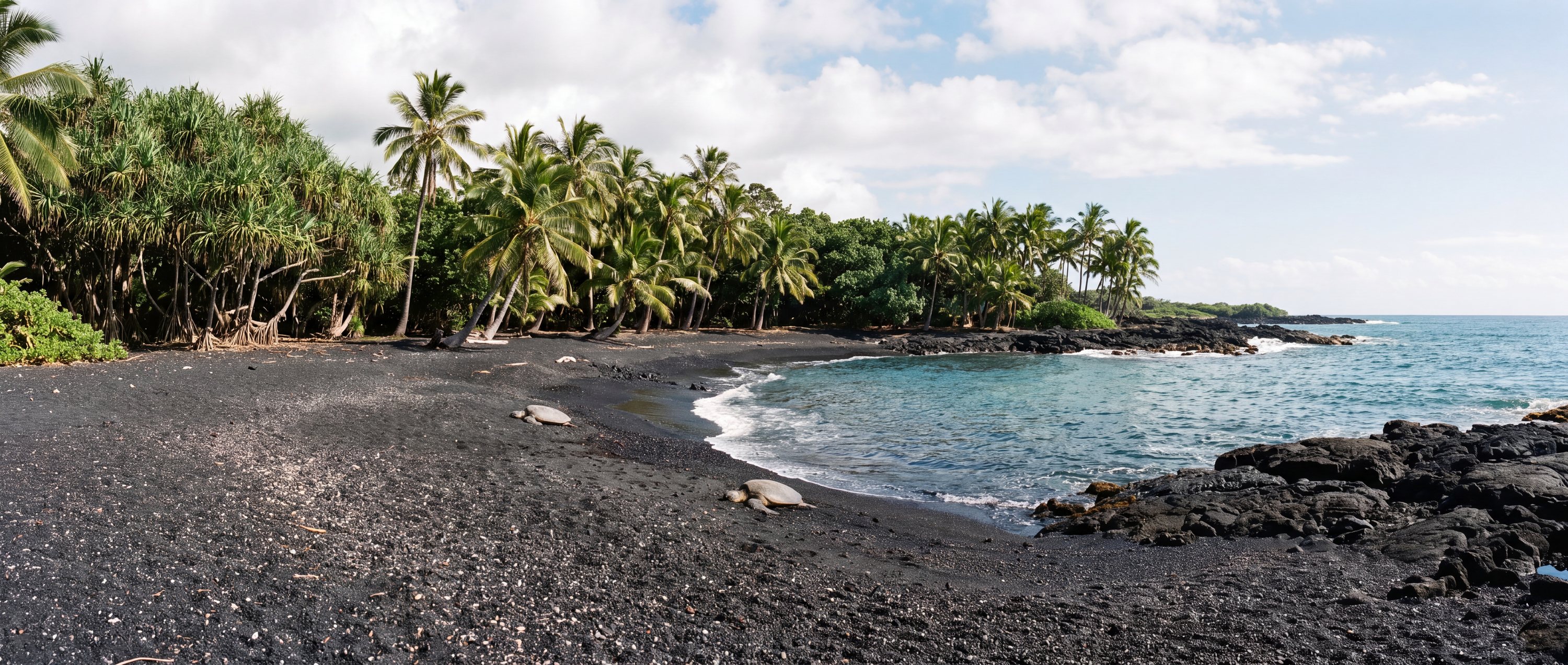
Sand is leftover rock, and rock has color
Sand is defined by grain size, not by what it is made of: particles between 0.0625 and 2 millimetres across, by the Wentworth scale used in sedimentology. Within that size window, almost any hard, weatherable material can end up as sand, and each source material carries its own color into the mix. A beach's sand color is therefore a rough map of the rock, reef and shell supply sitting upstream of it, whether that supply is a river draining a mountain range, a fringing coral reef, or the flank of the volcano the beach sits on.
Quartz and feldspar: the default tan, gold and white
Most of the world's sand, including nearly every beach fronting a continent, is dominated by quartz, sometimes mixed with feldspar and small amounts of mica. Quartz is common in continental crust and is chemically and physically tough: it resists the weathering that breaks down softer minerals long before quartz grains wear away. Rivers carry quartz grains from eroding mountains and granites to the coast over very long timescales, and wave action keeps sorting and rounding them. Pure quartz sand is close to colorless or white; traces of iron oxide coating the grains shift it toward tan, gold or pale orange, which is why so much ordinary sand across temperate coastlines reads as cream, beige or golden rather than stark white.
Coral, shell and the carbonate beaches
On many tropical coasts, sand is not rock at all but biology: the broken skeletons of corals, mollusc shells, sea urchin spines and the calcified plates of marine algae, all made of calcium carbonate. Carbonate sand is usually bright white because the source material itself is pale, and it forms readily on and near coral reefs, where wave action constantly grinds skeletal debris into grains. Anakena, the white coral-sand beach on Easter Island, Chile, is a clear example of a beach built almost entirely from reef and shell carbonate rather than weathered continental rock.
A specific carbonate pigment produces one of the more distinctive color effects on any beach: pink sand. Several beaches get a genuine pink tint from the shells of a single-celled organism, a foraminifera commonly called Homotrema rubrum, whose tiny shells are naturally red. When wave action breaks these shells down and mixes the red fragments through white coral sand, the result is a sand that is visibly pink, more so where fragments concentrate at the waterline. Pink Sands Beach on Harbour Island in the Bahamas is a well documented case of this mechanism, its five-kilometre shore colored by foraminifera shell fragments worked in among ordinary coral sand.
Basalt and olivine: the volcanic beaches
Young volcanic islands produce their own distinct sand because the parent rock itself is dark. Basalt, the most common volcanic rock on Earth, is rich in iron- and magnesium-bearing minerals and is naturally black or very dark grey. Where waves attack basalt lava flows or pulverise volcanic glass, the resulting sand is black rather than tan, with none of the light-colored quartz or carbonate grains that dominate elsewhere. Punaluʻu Black Sand Beach on Hawaiʻi Island formed this way, built from basalt broken down by surf where lava once met the ocean. A small number of beaches on young volcanic islands take this one step further: where a lava contains a lot of olivine, a green iron-magnesium silicate mineral that is denser and more weather-resistant than the surrounding basalt glass, wave action can concentrate olivine crystals into a sand that reads distinctly green, since the lighter, more fragile basalt glass washes away faster than the durable olivine grains.
Iron oxide, garnet and the less common stains
Two further processes color sand without changing what most of it is made of. The first is iron oxide staining: when sand or the rock behind it contains iron-bearing minerals, oxidation produces reddish or rust-colored coatings, the same chemistry that turns steel to rust. At Legzira on Morocco's Atlantic coast, the sandstone cliffs and the beach beneath them carry this rust-red color from iron oxide in the rock itself, visible in the golden-red sand at the base of the cliffs.
The second is mineral sorting by density. Streams draining mountains that contain garnet, a hard, often purple-red mineral used industrially as an abrasive, can wash small amounts of garnet sand down to the coast alongside far larger volumes of ordinary quartz sand. Because garnet is denser than quartz, wave and wind action can concentrate it into visible streaks and patches rather than spreading it evenly, which is why garnet beaches often show sand color in bands rather than as a uniform tint. Pfeiffer Beach in California's Big Sur, with its streaks of purple sand sourced from manganese garnet in the hills above, is a documented example of this sorting effect.
Reading a beach's geology in its sand
Put together, a beach's sand color is rarely one single cause. It reflects the rock type feeding the coast, how far the sand has travelled, how much of the supply is organic rather than mineral, and how wave energy sorts grains of different density and durability once they arrive. A single stretch of coast can show more than one effect at once, such as ordinary quartz sand lying close to a basalt headland that produces noticeably darker sand only metres away. Treated this way, sand color is simply geology and biology made visible at grain scale.