
- Sand
- Pale with localized pink tones
- Water
- Very shallow lagoon water in places
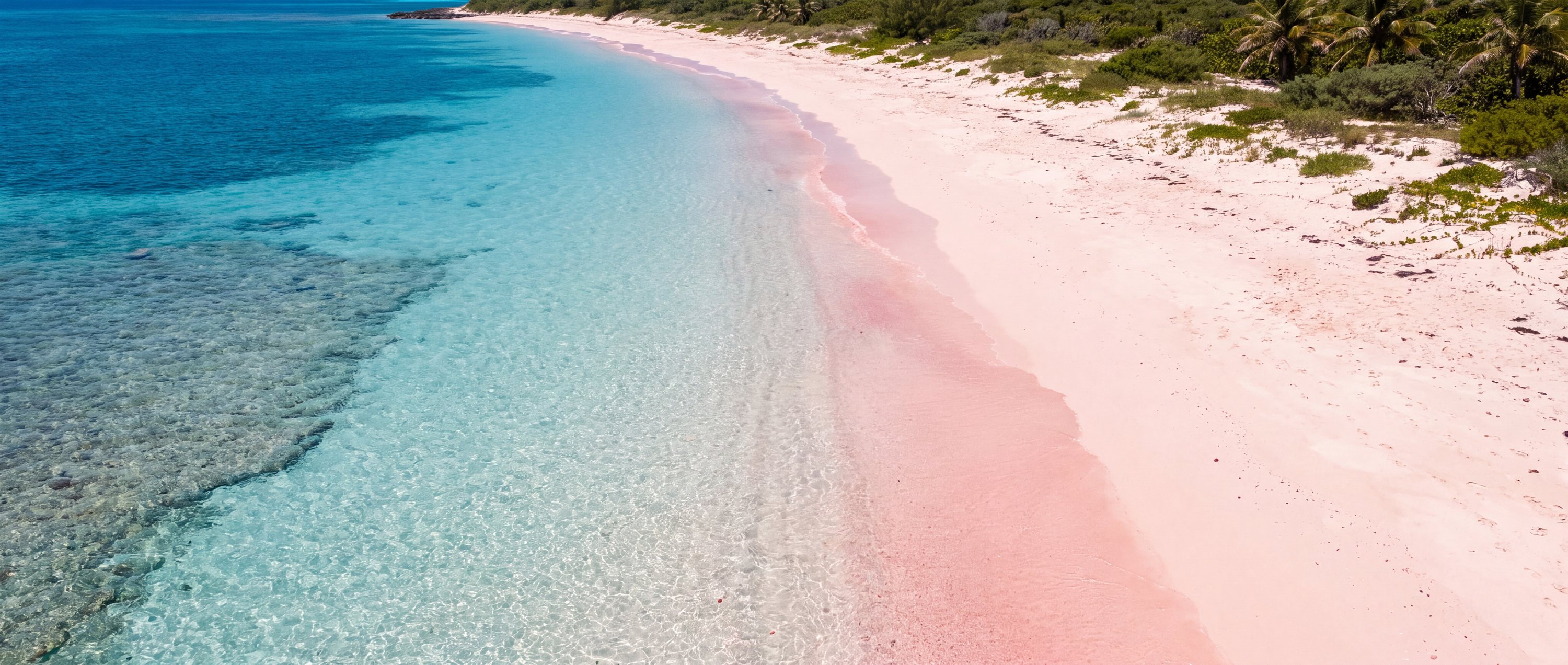
14 beaches
Pink sand is rare: it needs red shell fragments from a nearby reef worked into pale coral sand. These are the pink sand beaches in the atlas, from Bermuda's south shore and the Bahamas to Crete, Sardinia and the islands of Indonesia and the Philippines.
Where they are
14 beaches in 10 countries: Bermuda 3 · Greece 2 · Indonesia 2 · Antigua and Barbuda 1 · Bahamas 1 · Barbados 1 · Canada 1 · Italy 1 · Philippines 1 · United States 1


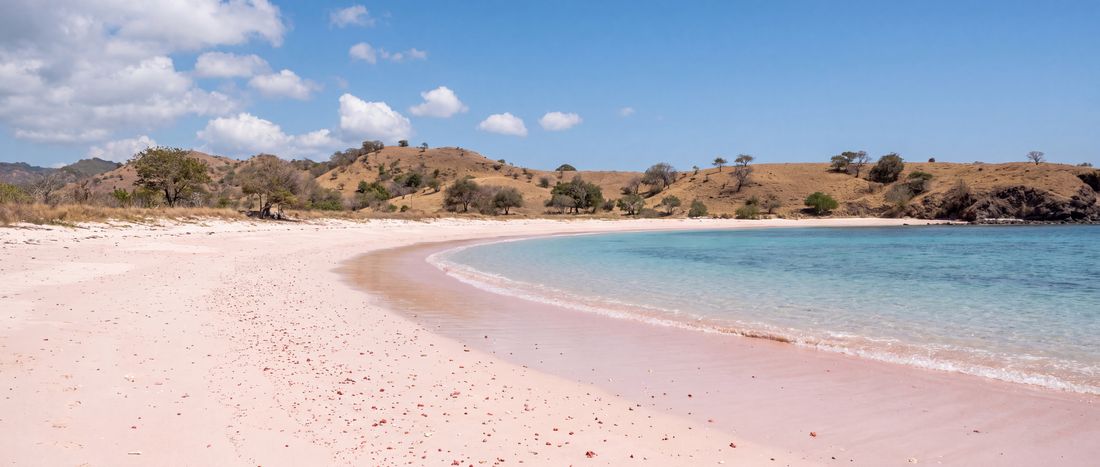
Gallery
30 more photographs of the beaches above, each from Wikimedia Commons with its creator and licence read from the file itself.


Field note
Several beaches get a genuine pink tint from the shells of a single-celled organism, a foraminifera commonly called Homotrema rubrum, whose tiny shells are naturally red. Waves break the shells down and mix the red fragments through white coral sand.
The colour is strongest where the fragments concentrate, often at the waterline, and it can come and go: Princess Diana Beach on Barbuda is described as a white sand beach that is periodically coloured pink. At Spiaggia Rosa on Budelli the colour comes from fragments of coral and the shells of other small reef organisms.
Read the field note: why sand is the colour it is →Method
Pink sand is rare, so each beach is listed by name and country and only where its name is a known pink sand beach or a cited source says its sand is pink. Names that merely share a word are left out: ramla only means sandy beach in Maltese, and Rosa Marina in Apulia is not pink. A beach mapped more than once appears once. A pink sand beach that is missing here is missing, not excluded; tell us and we will add it.
Suggest a beach →Questions
Mostly because of the shells of Homotrema rubrum, a single-celled foraminifera with naturally red shells. Waves break them into fragments and mix them through white coral sand, which turns visibly pink.
Not always. The tint depends on how many red fragments are in the sand and where they collect, usually at the waterline, so some beaches look pink only at times or in certain light.
Near reefs that supply the red shell fragments: Bermuda, the Bahamas and Barbuda in the Atlantic and Caribbean, Elafonisi and Balos on Crete, Budelli off Sardinia, and islands in Indonesia and the Philippines.
The colour needs a steady supply of red shell from a nearby reef and pale sand to show it. Most beaches are quartz or volcanic sand, so pink is one of the rarest beach colours.
Provenance


